
In short
A leak from commercial heating or chilled-water pipework can cause pressure loss, plant shutdowns and water damage. Keep people and electrics away from the water, contain it where safe, isolate only if you are authorised and know which valves serve the leak, record the location and system, and call a commercial mechanical engineer. Do not disturb old pipe lagging that may contain asbestos.
Is it urgent?
Call now if
- Water is leaking onto electrical equipment, IT or occupied areas
- A heating or chilled-water leak is causing pressure loss or plant shutdown
- Hot water or steam is escaping from pipework or valves
- A leak is getting worse or cannot be contained
Usually suitable for scheduled work
- A slow weep from a valve gland that is contained
- Planned replacement of corroded pipework sections
- Lagging and insulation repairs with no leak
Heating and chilled-water pipework leaks
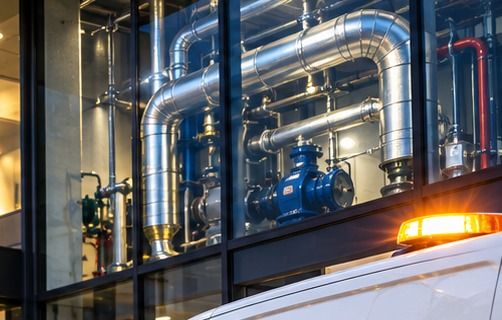
Commercial heating and chilled-water systems circulate large volumes of water, often at temperature and pressure. A leak can quickly cause water damage, pressure loss and plant shutdowns.
Where leaks occur
| Location | Typical cause |
|---|---|
| Valves and valve glands | Worn packing, failed seals |
| Flanged and threaded joints | Gasket failure, thermal movement |
| Pump connections and seals | Seal wear, vibration |
| Pipe runs | Corrosion, frost damage, mechanical damage |
| Terminal unit connections | Fan coil or radiator valve failures |
Operational and water-damage risks
Leaks can trip electrical equipment, damage ceilings, stock and IT, lower system pressure until boilers or chillers stop, and dilute water treatment.
Safe escalation
Water and electricity. If water is near electrical equipment, keep clear. Only isolate electrical supplies if this can be done safely and you are authorised.
- contain the water and protect equipment below
- record exactly where the leak is and which system it is on
- isolate the section only if you know the valves and are trained to do so
- call the 24/7 contact line
Professional fault assessment and remedial works
An engineer will isolate and drain the affected section, assess the pipework condition, repair or replace the failed joint, valve or section, refill and repressurise the system and check water treatment. Where corrosion is widespread, a wider remedial plan may be recommended.
Scope
This service covers mechanical heating, chilled-water and plant room pipework. It does not cover unrestricted plumbing, drainage or public water main emergencies.
Commercial Pipework Repairs: frequently asked questions
What should we do first when a heating pipe is leaking?
Keep people away, protect electrics and equipment, contain the water with buckets or absorbent materials, and if you are trained and know which valves serve that section, isolate it. Record the location and system, then call an engineer. Hot water under pressure can scald.
Do you deal with drainage or mains water bursts?
This page covers mechanical heating, chilled-water and plant room pipework. Drainage and public water main problems are outside this scope. Tell us what is leaking when you call and we will advise.
Why do commercial heating pipes leak?
Common causes include corrosion (often from poor water treatment), failed joints and gaskets, valve glands, thermal movement, frost damage and mechanical damage during other works.
Can a pipework leak cause boilers to stop?
Yes. Losing water from a sealed system lowers pressure until boilers lock out on low-pressure protection. See pressurisation unit repairs.
Is pipe lagging in older buildings dangerous?
Older lagging may contain asbestos. Do not disturb damaged lagging. Check the building's asbestos register and tell the engineer before work starts.
UK guidance and references
Primary and industry sources relevant to this subject. Always check the current edition and how it applies to your building.
- Asbestos Health and Safety Executive
- Pressure systems Health and Safety Executive
- Electrical safety at work Health and Safety Executive